
A quick update on how AI is impacting Insurance
Artificial intelligence is shifting from basic experimentation into fast operational deployment across the Australian Insurance Industry in Australia: 2026 Trends, reshaping claims, underwriting, and regulatory compliance.
Claims and Broker Automation
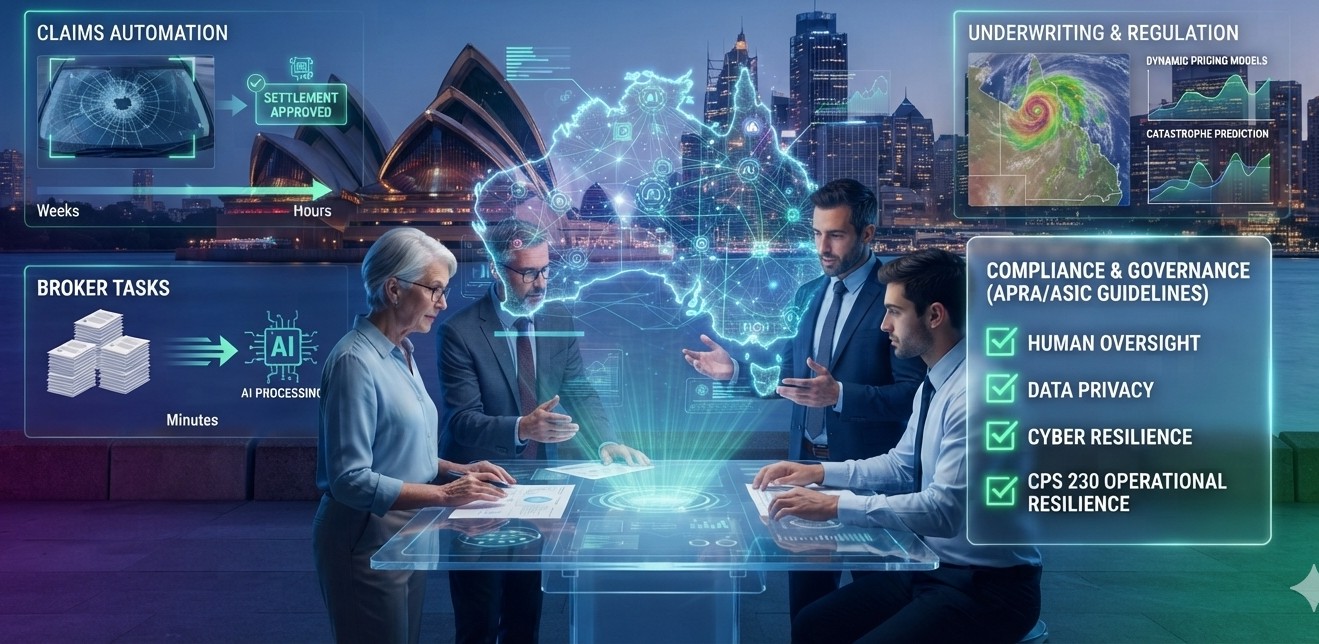
- Faster processing: About 74% of Australian insurers now use generative and agentic AI in claims resolution, compressing routine settlement times from weeks down to hours.
- Administrative relief: AI tools handle routine broker tasks like issuing certificates of currency or processing quote intakes in minutes rather than days.
- Fraud detection: Computer vision and network analysis spot hidden fraud patterns that rules-based legacy systems miss
Underwriting and Risk Assessment
- Dynamic pricing: Machine learning models process broader, real-time data sets to refine risk evaluation and predict catastrophe losses.
- Policy changes: Insurers are updating commercial liability policies to explicitly include affirmative AI cover or specific AI exclusions.
Regulation and Compliance
- Regulatory pressure: Regulators like APRA and ASIC view AI governance, data privacy, and cyber resilience as core compliance obligations tied directly to an insurer's license to operate.
- Accountability: Guidelines emphasize human oversight, strict operational resilience (under standards like CPS 230), and clear documentation for automated decision-making.
Ultimately, 2026 marks the turning point where AI ceases to be a futuristic technology and becomes the foundational operating system of Australian insurance. Insurers who successfully balance rapid technological deployment with rigid, APRA-compliant governance frameworks will not only capture immense operational efficiencies but will also secure their long-term license to operate in an increasingly scrutinised market.
The deployment of AI is no longer just about internal cost-cutting; it is about building a faster, more resilient insurance ecosystem for everyday Australians. As insurers push deeper into automated decision-making, the ultimate winners will be those who can leverage this computational power to lower premiums and process claims in hours, while maintaining the absolute transparency and human oversight that regulators and consumers demand.


